
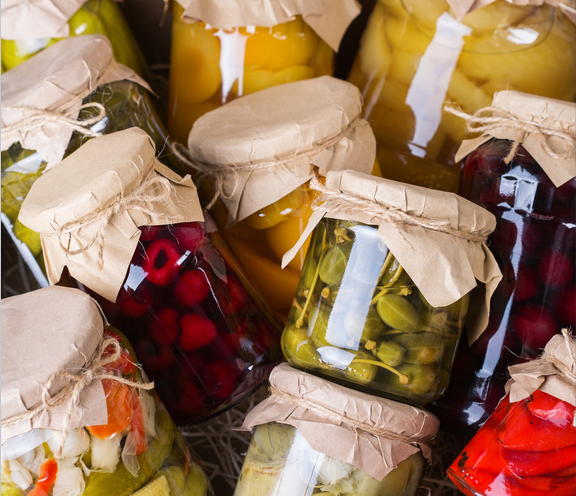
Fermented Foods and Your Gut: What the Science Actually Says
If you’ve walked down a supermarket aisle lately, you’ve probably noticed “gut health” plastered across everything from yoghurt to soft drinks. Kimchi, kombucha, kefir and miso have gone from niche pantry items to household staples, and for good reason. The science on fermented foods and the gut microbiome has genuinely built up over the past decade. But how much of it is real, and how much is marketing?
Humans have been eating fermented foods for close to 10,000 years, long before we understood why they worked. Now, we’re starting to.
Here’s what the current research actually says and how it applies if you’re navigating perimenopause or menopause, when your gut microbiome is already going through its own transition. More on that below.
What Are Fermented Foods, Exactly?
Fermented foods are foods or drinks that have been transformed through the controlled growth of bacteria, yeasts or fungi. Miso, kimchi, sauerkraut, kefir, kombucha, tempeh and natto are all classic examples, along with live-culture yoghurt and traditionally made sourdough.
During fermentation, these microorganisms break down sugars and other compounds, creating distinctive flavours and textures and, more importantly, a range of potentially beneficial by-products.
Why Do Fermented Foods Matter for Your Gut Microbiome?
A comprehensive 2022 review published in the journal Nutrients looked closely at what happens after you eat fermented foods. Each fermented food hosts its own distinct population of microorganisms. Once eaten, both the nutrients and the microbes themselves may survive long enough to interact with your gut microbiome, an interaction scientists can now track down to individual species and strains.
The researchers concluded that fermented foods can measurably affect the gut microbiome, both in the short term and over time, and belong in the diet as more than a passing trend.
A more recent review, published in Advances in Nutrition in late 2025, brought together clinical and population-level evidence across a much wider range of health outcomes, including metabolic health, cardiovascular disease risk, cancer risk and neuropsychological health.
In relation to mood and brain health, the researchers concluded that fermented foods may support mental and cognitive health through the gut-brain axis, largely by influencing the composition of gut bacteria, immune function and inflammation. It is an emerging area of research rather than settled science, but the direction of the evidence is consistent.
Fermentation also does something more mechanical. It can increase the bioavailability of key nutrients, including vitamins C, B12 and K, boost antioxidant compounds such as polyphenols and flavonoids, and produce organic acids such as lactic acid. These compounds contribute to both flavour and potential health effects.
Is “Gut Health” Just a Marketing Term?
Partly, yes, and it’s worth knowing that. “Gut health” does not have a standardised scientific definition, which means the term can be used loosely on packaging with minimal regulation.
Not every product labelled “gut-friendly” is fermented or contains live microorganisms by the time it reaches your trolley and, ultimately, your table. Commercial fermented products are also often pasteurised for shelf stability, which deactivates the live microbes, even though the metabolic by-products and some potential benefits may remain.
That said, the underlying science is real. Clinical studies suggest that eating fermented foods may increase gut microbiome diversity, reduce inflammation, support digestive health and potentially lower the risk of conditions such as type 2 diabetes. The important nuance is that not all “fermented” products on supermarket shelves are created equal.
What Does This Mean During Perimenopause and Menopause?
This is where it becomes particularly relevant for many of you reading this. Gut microbial diversity naturally shifts as oestrogen declines during the menopausal transition, and the relationship runs in both directions: your gut influences your hormones, and your hormones influence your gut.
This may have flow-on effects on digestion, mood, energy and even bone health, as a healthy and diverse gut microbiome plays a role in how effectively you absorb nutrients such as calcium.
Given that much of the body’s serotonin is produced in the gastrointestinal tract, looking after your gut microbiome is not simply a wellness cliché during this transition. It is one of the more practical, evidence-based places to start.
I explore this in more depth in my YouTube video, How Our Gut Changes Through the Transition Into Menopause.
How Do I Know Whether Something Is Actually Fermented?
There are a few practical checks you can make. Look for words such as “fermented”, “cultured” or “live active cultures” on the label.
Products preserved in vinegar, rather than through microbial fermentation, are often not truly fermented, even when they are sold alongside fermented foods. Storage is another useful clue. Foods containing live cultures are often refrigerated, as the heat treatment used to make products shelf-stable can deactivate the live microbes.
How Much Fermented Food Should I Actually Eat?
There is no official serving guideline yet. Researchers are still working out whether servings should be measured according to live microbe counts or the amount of fermentation by-products present. The ideal amount is also likely to vary from person to person.
As a practical guide, a quarter of a cup of fermented vegetables such as sauerkraut or kimchi, 180-200 g of yoghurt or kefir, a small serving of kombucha, or a tablespoon of miso can each count as one serving. Aiming for around two servings a day, introduced gradually, may be a reasonable target for many people.
How Do I Start Without Upsetting My Gut?
Start slowly. Introducing too much fermented food too quickly can cause bloating, gas and discomfort while your digestive system adjusts.
Begin with one small serving a day and build up gradually. If you have digestive sensitivities such as irritable bowel syndrome, pay attention to what your body tolerates. Some people do better with dairy-based ferments such as yoghurt or kefir, while others prefer fermented vegetables.
There is no single right entry point. There is simply the entry point that works for you.
An Easy Place to Start: Miso
If you’re looking for a simple way to bring more fermented food into your week, miso is genuinely one of the easiest options. It is a traditionally fermented soybean paste that takes only seconds to stir into a broth.
My Tofu or Salmon and Vegetable Miso Soup is a simple, nourishing way to make miso part of a regular habit rather than an occasional experiment.
If you’d like personalised support with your gut health, hormones or digestion during perimenopause and menopause, I offer consultations in Neutral Bay and via telehealth Australia-wide. You are welcome to book online here.
References
Leeuwendaal, N.K., Stanton, C., O’Toole, P.W. and Beresford, T.P. (2022). “Fermented Foods, Health and the Gut Microbiome”. Nutrients, 14(7), 1527.
Sampsell, K., Marcolla, C.S., Tapping, S., et al. (2025). “Current Research in Fermented Foods: Bridging Tradition and Science”. Advances in Nutrition.
Stanford Medicine Nutrition Studies Research Group. “Fermenting the Facts: A Science-Based Guide to Fermented Foods”.